Radon Mitigation Systems
Active sub-slab depressurization systems engineered to reduce radon below 2.0 pCi/L.
Typical$1,200-$2,400
Radon mitigation across Greater Cincinnati and Northern Kentucky since 2019, with every install performed by an NRPP-credentialed local mitigator. Most basement installs complete in one day with 48-hour post-install verification included.
Step 1
Tell us what your test showed, or get help testing first. 10-minute call, no pressure, plain answers.
Step 2
The Cincinnati-area mitigator measures your foundation, identifies the cleanest mitigation routing, and gives a fixed quote on the same visit.
Step 3
Most Cincinnati installs complete in 4-8 hours. The crew seals entry points and installs the active sub-slab depressurization system.
Step 4
Local contractors retest at 48 hours and again at 12 months, both included. EPA-format report compatible with realtor and lender requirements.
Hamilton County homes test above the EPA action level (4.0 pCi/L).
Source: EPA Radon Zone 1 designation
Radon-attributable lung cancer deaths in the United States. Second only to smoking.
EPA-recommended post-mitigation target. Below this level, lung-cancer risk drops to general-population baseline.
Cincinnati and surrounding counties sit in EPA Radon Zone 1, the highest-risk classification.
EPA recommends mitigation above 4.0 pCi/L and consideration of mitigation between 2.0 and 4.0 pCi/L.
Ohio Radon Program guidance on testing, mitigation, and contractor licensure.
The National Radon Proficiency Program credentials Cincinnati radon mitigators.
Every job comes with a written quote and no-pressure consultation. Workmanship warranty terms are set by your lead technician and confirmed before work begins.
Active sub-slab depressurization systems engineered to reduce radon below 2.0 pCi/L.
48-hour and long-term testing using EPA-approved devices. Real-estate-grade reports.
Vapor-barrier encapsulation plus ASD for homes with crawl space foundations.
Fast-turnaround testing and same-week mitigation for closing timelines.
Schools, daycares, multifamily, and commercial properties. Multi-zone designs.
Fan replacement, manometer service, post-failure recommissioning.
We offer $50 off any radon service for veterans, active military, first responders, and seniors 65 and older. Mention it when you call or text us.
Mention this offer when you call
(513) 960-3089“Pre-mitigation 8.4 pCi/L, post-mitigation 0.6. Crew was in and out in one day, exterior fan is silent on the side of the house. They walked us through the install and the closeout paperwork was clean. Could not ask for more.”
“Real-estate close was on a 7-day clock after the inspection came back at 9.1 pCi/L. Quote Tuesday, install Thursday, post-test Saturday at 1.2 pCi/L. Saved the deal. Lender accepted the documentation without a re-inspection.”
“Tested at 4.9 pCi/L in the basement, post-mitigation at 0.4. They explained every step on the on-site visit, the install was clean, the price matched the quote, and the 12-month follow-up retest was included without us having to chase it.”
These reflect real situations from homeowners across our network. Names and some identifying details are adjusted to protect homeowner privacy while keeping the point of each story intact.
Greater Cincinnati sits on the Cincinnati Arch, an Ordovician-period uplift of limestone and shale. Uranium-238 distributed through that bedrock decays into radium-226, then into radon-222, which is a colorless, odorless gas that diffuses upward through soil and into homes. The EPA classifies Hamilton, Butler, Warren, and Clermont counties as Radon Zone 1: predicted average indoor screening levels at or above 4.0 pCi/L. National average sits at 1.3 pCi/L.
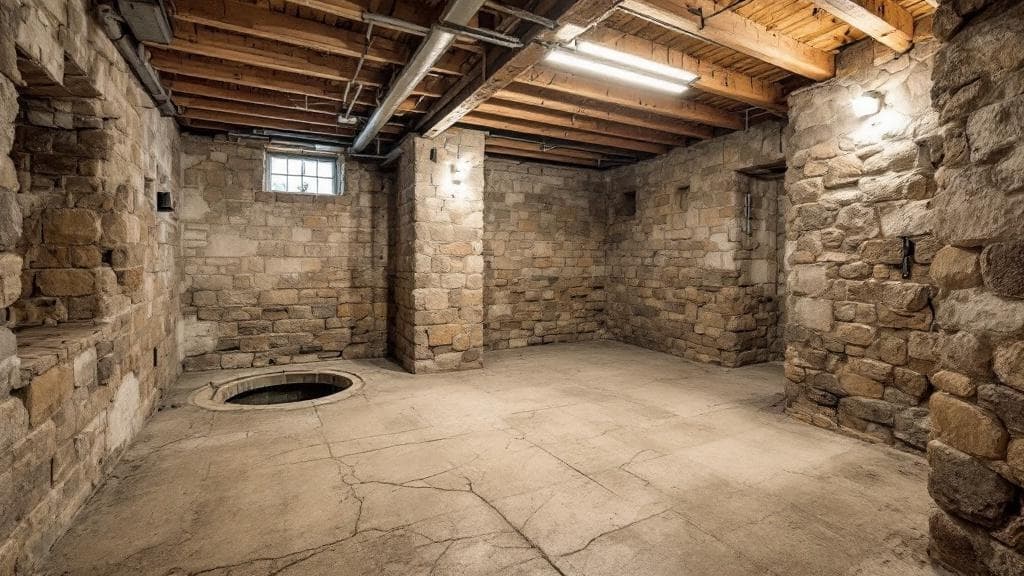
Local geology compounds with local construction style. Most Cincinnati housing stock built before 1995 has a poured-concrete or block basement with no passive radon stack. Negative pressure inside the home (caused by clothes dryers, range hoods, bath fans, and chimney stack effect in winter) pulls radon-laden soil gas through cracks, sump pits, and gaps around plumbing penetrations. The result: roughly 1 in 3 homes tested in Hamilton County come back above the EPA action level of 4.0 pCi/L, per Ohio Department of Health Radon Program data.
Newer construction (post-2000) is often better because Ohio adopted appendix-F-style radon-resistant new-construction codes for designated Zone 1 counties. Many of those homes have a passive vent stack stubbed into the slab. Activating one (adding a sealed fan) is the cheapest mitigation path on the market, typically $700-$1,200, versus $1,200-$2,400 for a full active sub-slab depressurization (ASD) install on an older home. Either path produces a radon mitigation system engineered to the ANSI/AARST CCAH-2020-0523 standard.
Most homeowners who order a hardware-store charcoal kit run a 3-7 day test in the lowest livable level of the house. That gives a usable screening number but does not satisfy a real-estate transaction. Lenders and inspectors expect professional radon testing in Cincinnati: a 48-hour test conducted by a NRPP-credentialed or NRSB-credentialed measurement professional using a continuous radon monitor (CRM), with the device placed under closed-house conditions and tamper protocols documented.
Closed-house conditions matter. CRMs log temperature, humidity, and barometric pressure alongside the radon reading, so the report can defend the result if the buyer's agent challenges it. The output is a PDF that conforms to ANSI/AARST MAH-2023 measurement standards, with average pCi/L, a chart of hourly readings, and a chain-of-custody section. That is what closing-ready means.
If the test comes back above 4.0 pCi/L during a real-estate window, three things happen in parallel. The seller's agent gets the report and the radon contingency clause in the purchase contract activates. A scoped quote for active sub-slab depressurization gets generated within 48 hours. The mitigation install is scheduled inside 5 business days and a 48-hour post-install retest confirms levels are below 2.0 pCi/L (the EPA-recommended post-mitigation target). Done right, this whole cycle fits inside a 14-day inspection window.
Radon is the second leading cause of lung cancer in the United States, behind tobacco. The EPA Citizen's Guide to Radon publishes lifetime-exposure risk estimates that are sobering when applied to typical Cincinnati pre-mitigation readings. At 8.0 pCi/L (a common reading in pre-1950 stone-basement Hyde Park or Norwood housing), the EPA's published risk tables suggest a meaningful lifetime lung-cancer risk for both never-smokers and smokers, with smokers' risk multiplied substantially because of the synergistic effect of tobacco smoke and radon exposure. At 4.0 pCi/L (the EPA action level), the EPA notes that about 62 per 1,000 lifelong smokers could develop lung cancer from radon exposure over a lifetime, and about 7 per 1,000 lifelong never-smokers. At 2.0 pCi/L (a typical post-mitigation level), risk drops materially toward the general-population baseline. Refer directly to the EPA Health Risk of Radon page for current numbers; the EPA periodically updates the tables as research evolves.
The Cincinnati-specific consideration is that 1 in 3 Hamilton County homes tests above 4.0 pCi/L per Ohio Department of Health data, and the average reading among that elevated cohort is 7-9 pCi/L. So the typical Cincinnati family with elevated radon faces meaningful lifetime cancer risk, not abstract statistical risk. A Cincinnati radon mitigation system moves a household from the risk profile of "high-radon" to "general population." That is the public-health justification for the $1,200-$2,400 install cost.
Smokers face a multiplicative effect with radon. A household where adults smoke or have smoked sees radon-related lung-cancer risk roughly 5-10x the non-smoker baseline at any given pCi/L exposure. For Cincinnati households with that combination, mitigation has the strongest health-economic justification of any single home modification a homeowner can make.
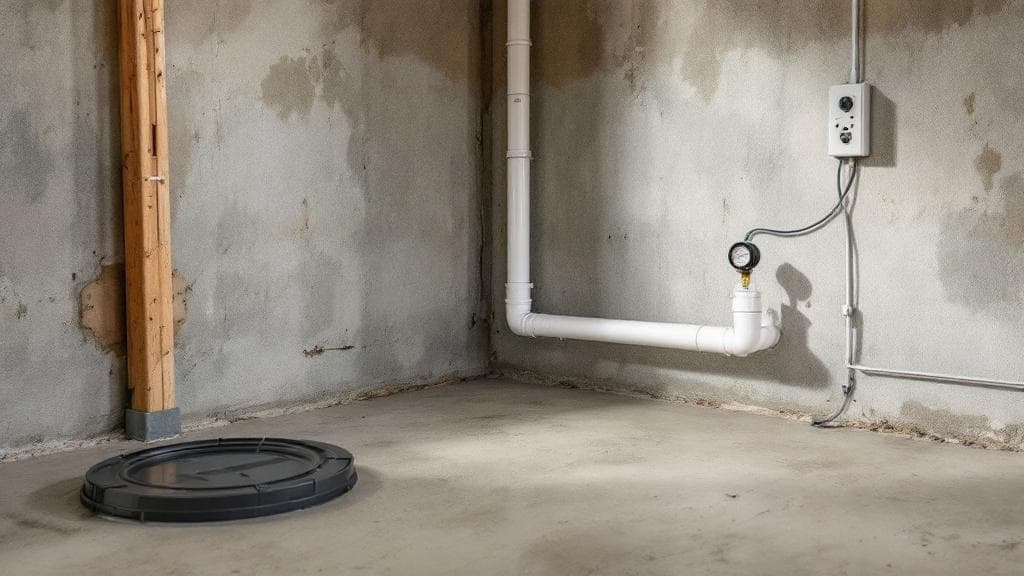
A properly installed Cincinnati radon mitigation system is mostly invisible after install day. The fan runs continuously at 50-90 watts, costing $80-$110 per year in electricity. The labeled fan-failure indicator at the basement ceiling glows when everything is working; check it monthly during the first year, then a few times a year thereafter.
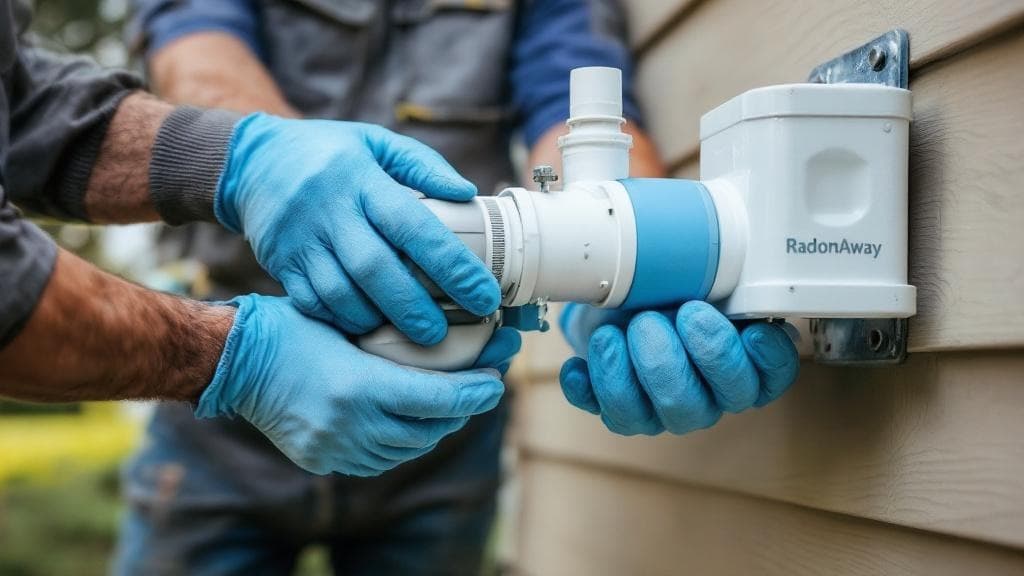
The biggest planned event is fan replacement. Modern Radonaway and Festa fans run 7-10 years on average, with some installs reaching 15+. When the fan eventually fails, the manometer u-tube fluid equalizes (visual signal) and the failure indicator changes state. Fan replacement is a 1-2 hour service call at $300-$600 labor plus the cost of the fan ($200-$400). Same Cincinnati-area technician handles routine warranty work.
The 12-month verification retest, included in the original install, runs without homeowner involvement; the technician places a continuous radon monitor for 48 hours and emails the report. After that, EPA recommends fresh testing every 2-3 years to verify the system is still performing. Hardware-store charcoal kits ($15-$30) are sufficient for routine testing on a working system; only borderline 2.0-4.0 pCi/L readings warrant professional follow-up.
Major events that warrant fresh testing regardless of cadence: any foundation or basement work, sump-pit modification, HVAC swap, basement finish project, or attached-garage retrofit. Each of these can change the air-pressure dynamics and shift radon levels. The mitigation system typically still works, but the effective level may change enough to require fan adjustment or sealing touch-up. Local install teams handle these adjustments under the original workmanship warranty within the warranty window and as paid service after.
A standard Greater Cincinnati radon mitigation install is more disciplined than most homeowners expect. Step one is a 10-minute phone consultation: the local mitigator asks for your test result, foundation type, basement use, sump-pump status, and whether any combustion appliances vent into the basement. That call alone rules out roughly 5% of jobs (homes that need a different intervention) and identifies any unusual routing constraints.
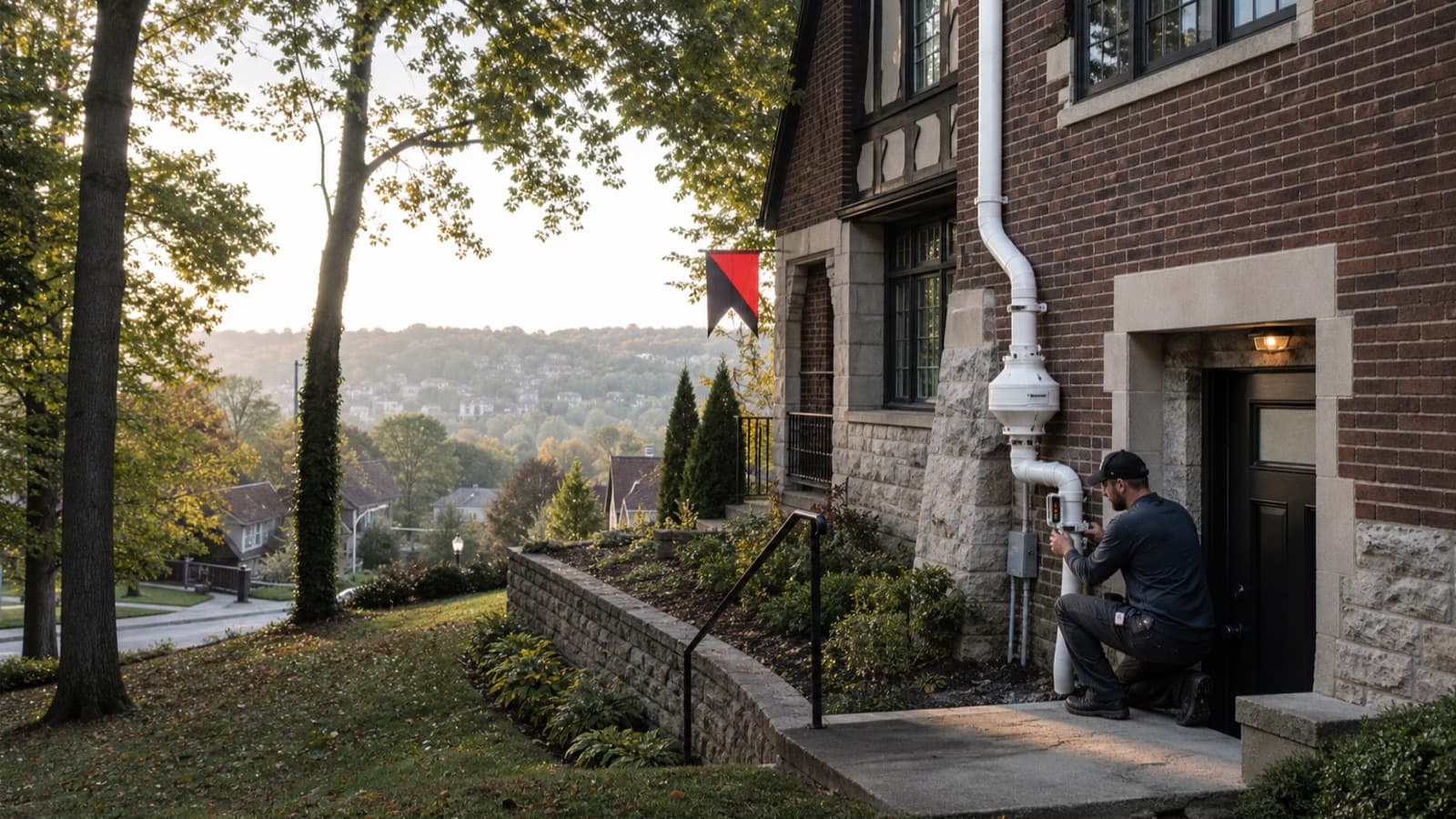
Step two is the on-site assessment. The lead technician measures the foundation footprint, locates the lowest-resistance suction point under the slab, identifies any visible cracks or sump-pit penetrations that need sealing, and decides whether the radon stack will run interior (through a closet chase to attic) or exterior (along the side of the house to roofline). On most Hamilton County and Mariemont-area homes, exterior routing wins because mature landscaping limits attic access. The output is a fixed-price quote, in writing, before any work begins.
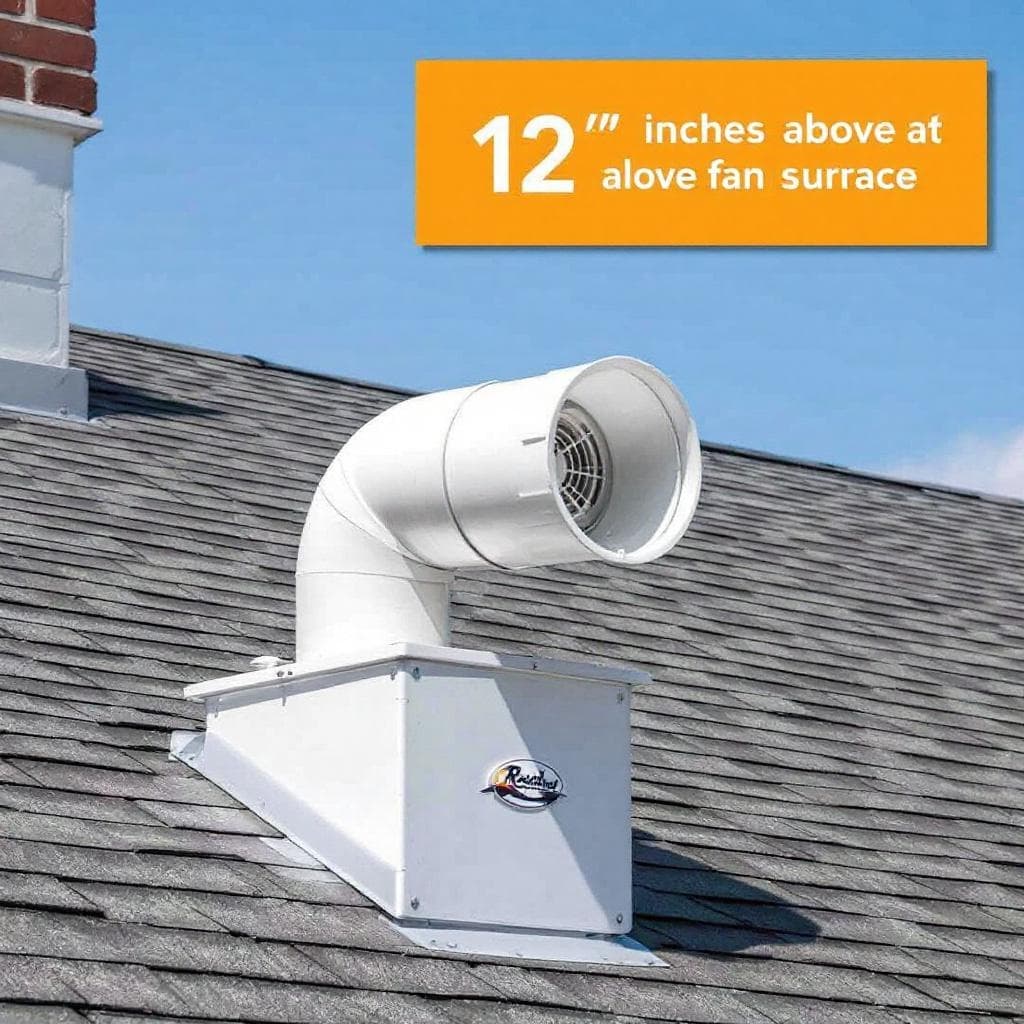
Step three is the install. A typical day looks like this: 7:30 AM crew arrival, 8:00 AM core-drill the slab to create the suction pit, 9:00 AM seal sump-pit lid and visible foundation cracks with polyurethane caulk, 10:00 AM run the 4-inch PVC stack, noon-1:00 PM mount the inline radon fan (Radonaway RP145 or similar) outside the conditioned envelope, 2:00 PM wire to dedicated 15A circuit, 3:00 PM install the manometer and labeled fan-failure indicator, 4:00 PM clean up and walk through the system with the homeowner.
Step four is verification. A continuous radon monitor sits in the lowest livable space for 48 hours, then again at the 12-month mark. Both retests are part of the original quote, not an add-on. The standard expectation: post-mitigation reading ≤ 2.0 pCi/L. If the reading is between 2.0 and 4.0, the install team troubleshoots (typically a sealing miss or insufficient suction, both fixable). Below 2.0 means the system is performing as designed and the lung-cancer risk for that household drops to general-population baseline per EPA's Citizen's Guide to Radon.
Greater Cincinnati and Northern Kentucky and surrounding communities. Same-day estimates within 29+ neighborhoods.
Most Cincinnati and Northern Kentucky homeowners get a written fixed-price radon mitigation or testing quote within the same business day. ANSI/AARST CCAH-2020-0523 installs by Ohio-licensed mitigators (ORC 3723.02).
Browse all 61 questions for more depth.
Most Cincinnati homes pay $1,200-$2,400 for a complete radon mitigation system installed. Crawl-space homes run $1,800-$3,500 due to vapor-barrier work. Initial 48-hour testing is $150-$300.
Pricing depends on foundation type (slab vs. basement vs. crawl space), system routing (interior vs. exterior), fan size required, sealing scope, and the post-mitigation pCi/L target. The cheap end ($1,200-$1,500) covers newer slab-on-grade homes with exterior routing on an unobstructed wall. The middle ($1,500-$2,000) covers older basements with some sealing required and interior chase routing. The high end ($2,000-$2,400) covers stone or block basements requiring substantial mortar-joint sealing or multi-zone homes needing two suction points. Crawl-space mitigation is its own pricing tier ($1,800-$3,500) because of the vapor-barrier and encapsulation work. Cincinnati pricing has held steady across credentialed mitigators for 3-5 years; quotes rarely vary more than 10-15% on the same scope, and any quote varying more is a flag to get a second opinion. Free phone consultations include foundation-type triage and produce a price range within 10 minutes. Watch for two pricing red flags: a "starting at" quote without on-site assessment (means the actual quote will be higher) and any contractor unwilling to put the price in writing before work begins. Both indicate scope creep or change-order pressure during install. The Cincinnati-area standard is a written, fixed quote good for 30 days, signed before any work happens.
A standard basement or slab radon mitigation system installs in 4-8 hours. Crawl-space systems with encapsulation take 1-2 days. Same- or next-week installs are typical across Greater Cincinnati.
A typical Cincinnati install day runs 7:30 AM crew arrival, core-drill the slab to create the suction pit by 9:00 AM, run the 4-inch PVC stack by 11:00 AM, mount the inline radon fan and run dedicated 15A wiring by 2:00 PM, install the manometer and cleanup by 4:00 PM. Crawl spaces add a vapor-barrier encapsulation step which extends the work to 1-2 days. Multi-zone homes (more than one foundation type, common in Indian Hill custom builds and Madeira additions) can extend to 1.5 days even on slab. The post-install 48-hour retest does not require homeowner presence; the technician places a continuous radon monitor and returns to retrieve it. Total time from "call placed" to "verified post-mitigation reading below 2.0 pCi/L" is typically 8-11 calendar days. Plan for two scheduling contingencies: outdoor temperatures below 40°F can delay the polyurethane sealing portion of the work (the caulk needs above-freezing cure conditions), and crew availability typically tightens during March-October peak season. Booking 2-3 weeks ahead during peak season is the comfortable lead time; emergency real-estate-driven installs always get prioritized within Cincinnati-area capacity. Every install is handled start to finish by an NRPP-credentialed local mitigator working to the ANSI/AARST CCAH-2020-0523 mitigation standard, with verification testing to MAH-2023. Free phone consultations include scope-triage and produce a price range within 10 minutes; on-site assessments produce a written fixed-price quote good for 30 days. Workmanship warranty terms are confirmed in writing before any work begins.
Yes. Hamilton County and most of Greater Cincinnati sit in EPA Radon Zone 1, the highest-risk classification. Radon is the second leading cause of lung cancer in the US, responsible for about 21,000 deaths annually.
Cincinnati sits on Ordovician-period limestone and shale that releases radon as uranium-238 decays. Hamilton, Butler, Warren, Clermont, and Campbell counties are all designated EPA Radon Zone 1, meaning predicted indoor screening levels at or above 4.0 pCi/L. Roughly 1 in 3 homes tested in Hamilton County exceeds that action level per Ohio Department of Health data. Risk is dose-dependent: long-term exposure at 8.0 pCi/L roughly doubles non-smoker lung-cancer risk over a 70-year window per the EPA Citizen's Guide to Radon. For smokers, the multiplicative effect with tobacco is significantly larger. Children breathe more rapidly than adults and have developing lung tissue, so households with children sleeping on lower floors have a higher risk-weighted exposure profile. Cincinnati-specific consideration: lower-floor occupied spaces (basement bedrooms, walk-out family rooms in homes built into a slope, finished basement workshops) compound the household-weighted exposure picture. The same 8 pCi/L reading carries materially different risk for a household sleeping on the second floor versus a household with a teenager bedroom in the basement. Mitigation closes the gap regardless.
Radon enters through cracks in the foundation, sump pits, gaps around pipes, and porous concrete. Even tightly built homes accumulate radon because indoor air pressure pulls it up from soil gas.
The mechanism is stack effect plus negative pressure. Warm air in the conditioned space rises and exits through upper-level penetrations (recessed lights, attic access, chimney chase, bath fans), creating slight negative pressure at the foundation level. That negative pressure pulls soil gas (which carries radon at concentrations 100-1000x indoor air) through every available path: visible slab cracks, sump-pit penetrations, plumbing rough-ins, expansion joints between slab and foundation wall, mortar joints in stone basement walls, and porous concrete itself. Cincinnati pre-1950 stone-basement homes (Hyde Park, Mariemont, Norwood) have the most paths and consistently show the highest pre-mitigation readings. Newer slab-on-grade construction with sealed penetrations leaks less, but never zero. Watch for: any slab penetration that was added or modified after original construction (post-1970 renovations sometimes cut the slab for a basement bathroom rough-in or sump installation). Those penetrations rarely get sealed to soil-gas-tight tolerance and become primary entry paths even in otherwise-tight homes. The on-site assessment maps every visible penetration before quoting scope, and each entry path is documented with photographs in the post-install closeout package so the homeowner has a baseline if levels drift in the future.
EPA recommends testing every 2 years and after any foundation work, HVAC changes, or basement renovation. Real-estate transactions also require fresh testing within the past 6 months.
EPA testing cadence guidance comes out of the Citizen's Guide to Radon and assumes that radon levels in a given home shift over time as the foundation settles, sealing degrades, HVAC changes, and adjacent excavation alters soil-gas pressure. The two-year cadence is conservative; many Cincinnati homeowners with documented post-mitigation readings under 2.0 pCi/L test annually because the cost is low ($15-$30 for a hardware-store kit) and the upside is catching fan failure or seal degradation early. Triggers that warrant immediate retest regardless of cadence: any foundation work, new sump pit or modification, basement renovation, HVAC equipment swap, attached-garage retrofit, or significant exterior excavation within 10 feet of the foundation. Real-estate transactions universally require fresh testing inside a 6-month window per FHA, VA, and most conventional lender contingency clauses. Cincinnati specific: Hamilton County and parts of Mariemont, Madeira, and Hyde Park have aggressive freeze-thaw cycles that crack slabs on a 5-10 year timeline, opening fresh radon entry paths even when the original mitigation system is still working. Testing every 2 years catches these geological shifts before levels drift back above the action level.
Short-term (48-hour) tests work for real-estate timelines and initial screening. Long-term (90-day) tests give the most accurate average exposure. Both have legitimate uses; pick based on the question being asked.
Short-term tests use a continuous radon monitor (CRM) or a charcoal canister and give a 48-hour to 7-day snapshot. Required for real-estate transactions because the closing window does not accommodate longer testing. Costs $150-$300 for professional CRM testing, $15-$30 for a charcoal kit. Long-term tests use alpha-track detectors that integrate radon decay over 90 days to 1 year, producing a true annual-average exposure figure. Costs $30-$50. The accuracy difference matters most for homes near the action-level borderline (between 2.0 and 4.0 pCi/L) where a single short-term snapshot might fall on either side of the threshold depending on weather and home occupancy that week. Heating season (October-March) typically shows the highest readings because homes are sealed and the stack effect is strongest. Year-round long-term testing averages out that seasonality. Cincinnati borderline-reading reality: about 30% of Hamilton County homes that test fall in the 2.0-4.0 pCi/L range. For these, the choice between short-term and long-term testing affects the mitigation decision. EPA risk tables show measurable lifetime cancer-risk reduction at every pCi/L level above 1.0; below the action level, the cost-benefit decision shifts toward household-specific factors (children, smoking history, basement occupancy hours).
Warranty terms are set by your lead technician and confirmed in writing before work begins. Most Cincinnati mitigators offer a multi-year workmanship warranty on the install plus a manufacturer warranty on the fan. Post-install retest at 48 hours and 12 months comes standard with every install here.
Three components carry separate warranty windows. The install workmanship warranty (sealing, routing, mounting, electrical) is typically 1-5 years depending on your installer. The fan itself is covered by manufacturer warranty: Radonaway RP145 carries a 5-year manufacturer warranty; Festa branded fans carry 10 years. The post-install verification testing (the 48-hour retest plus 12-month retest) is part of the original quote and is performed at no additional cost. If the post-mitigation reading exceeds 2.0 pCi/L on the verification test, the installing technician returns to troubleshoot at no charge; typical fixes are additional sealing or fan upsizing. Always get warranty terms in writing before signing the quote; verbal "lifetime guarantees" are unenforceable and a red flag. Typical Cincinnati workmanship warranty norms: 5 years on routing and sealing, 10 years on the fan (matching manufacturer), lifetime on the install paperwork. Some installers offer transferable warranties (carries to next homeowner at sale); others do not. Confirm transferability before signing if the homeowner plans to sell within the warranty window; a transferable warranty adds modest resale value.
Minimally. The fan runs continuously and uses about 50-90 watts, roughly $5-$10 per month in electricity. Heated/cooled air loss through the system is offset by sealing work done during install.
The math: a Radonaway RP145 fan at 80 watts running 24/7 consumes about 700 kWh/year, costing roughly $90-$110/year on Duke Energy Cincinnati residential rates. The conditioned-air loss through the radon stack is typically a wash because the install includes sealing slab cracks, sump pits, and rim-joist penetrations that were leaking conditioned air into the soil before mitigation. In practice, blower-door tests pre and post often show a slight reduction in air-change rate after mitigation due to the sealing work. For homes with combustion appliances (gas furnace, water heater, gas dryer), proper mitigation design includes makeup-air consideration; back-drafting is preventable but worth confirming with a combustion-safety test if the home uses natural-draft appliances. Cincinnati Duke Energy residential rate context: at roughly $0.13/kWh average and 700 kWh/year fan consumption, the annual electric cost runs $90-$110. Time-of-use plans (off-peak overnight charging) do not affect this materially because the fan runs continuously. Solar-equipped Cincinnati homes effectively offset the full radon-fan electric cost; battery-backed solar covers it during outages too. For homeowners tracking energy use closely, the radon fan is a fixed continuous load that shows up cleanly on smart-meter usage breakdowns and can be verified at install time using a Kill A Watt meter or equivalent.
Radon mitigation across Greater Cincinnati and Northern Kentucky since 2019, with every install performed by an NRPP-credentialed local mitigator. Mon-Sat 8am-7pm.